This is the breaking exclusive that the medical establishment never expected to surface.
For years, the unbelievable story of Kenadie Jourdin-Bromley was quietly whispered in hospital corridors as a total, inexplicable anomaly.
When she was born in Canada in 2003 weighing just over a single kilogram, elite specialists immediately sealed her fate with a devastating, ironclad prognosis.
They branded her with the nickname “Thumbelina,” an endearing title that masked the grim and terrifying reality of her exceptionally rare genetic reality.
Behind closed doors, her condition was identified as primordial dwarfism, a profoundly uncommon diagnosis that immediately triggered a cascade of worst-case scenarios.
The medical consensus was absolute and unyielding.
Her tiny lungs were severely underdeveloped, her fragile body completely unequipped for the harsh realities of the outside world.
Experts stood in the delivery room and delivered a chilling verdict to her devastated parents.
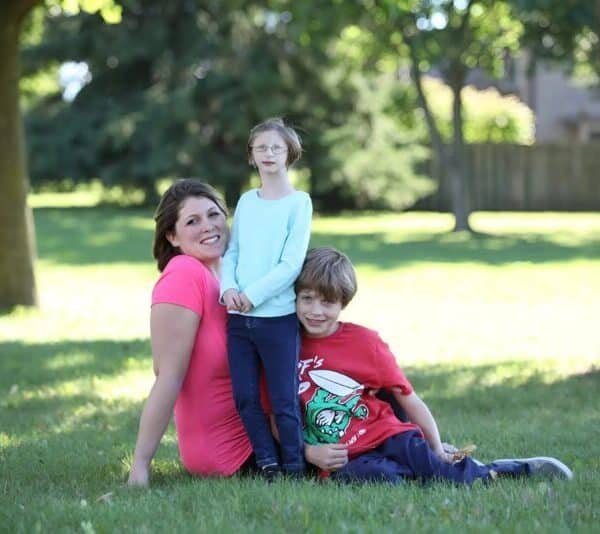
They were explicitly warned that Kenadie’s survival beyond the first few agonizing days—or even hours—was a clinical impossibility.
The predictive models and historical data pointed to an immediate, tragic conclusion.
Specialists explained that infants presenting with this level of developmental complication succumb rapidly to respiratory and organ failure.
It was a definitive, clinical death sentence handed down before her life had even truly begun.
Faced with an aggressively sterile hospital environment and the cold certainty of science, Kenadie’s parents executed a shocking pivot.
They completely rejected the clinical trajectory laid out by the experts.
In a massive, rebellious decision fueled by pure emotional desperation, they refused to let their daughter’s final moments be dictated by machines and monitors.
They took her home.
This was not a surrender, but a radical choice to surround her fleeting existence with profound warmth and fierce familial protection.
The immediate aftermath of this decision sent shockwaves through their private circle.
The agonizing wait began, with every breath meticulously counted in the quiet confines of their home.
But what happened next would completely dismantle every established expectation and force a massive reckoning within the pediatric community.
Instead of fading into the tragic statistic she was destined to become, Kenadie exhibited a relentless, inexplicable refusal to surrender.

She kept breathing.
She kept feeding.
Against every known law of medical probability, her fragile body began to pull strength from an unknown source.
The immediate backlash to this survival was profound confusion among the specialists who had signed off on her impossible prognosis.
Days bled into weeks, and weeks transformed into a shocking, undeniable reality.
The definitive timelines provided by the highest tiers of medical authority were collapsing in real-time.
Doctors who had previously spoken with absolute, cautious certainty were suddenly forced to witness a resilience they simply could not quantify.
Her growth remained drastically suppressed, anchoring her far below the absolute bottom of any known developmental chart.
Yet, her sheer biological stubbornness shattered the illusion that medical science holds all the final answers.
As Kenadie survived her perilous early years, the narrative shifted from a tragic countdown to an explosive revelation of human endurance.
She was subjected to rigorous, ongoing monitoring as baffled specialists scrambled to map a future they had promised would never exist.
Her parents transformed into fierce, unyielding advocates, navigating a complex web of healthcare systems to protect the miracle they brought home.
The implications of her continued survival are utterly staggering for the medical community at large.
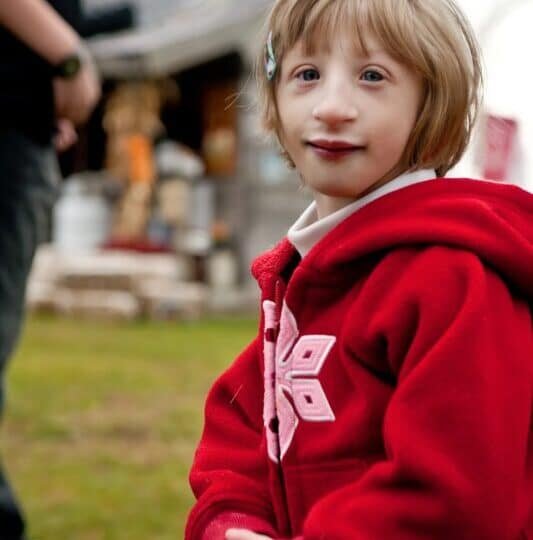
It forces a terrifying question: how many other definitive, hopeless diagnoses are delivered with too much certainty?
Kenadie’s journey exposes the absolute necessity of questioning the textbook limits of human resilience.
As she aged, an entirely new layer to this incredible exposé began to unfold.
She didn’t just survive; she began to exhibit a vibrant, fiercely expressive personality that commanded attention.
Her infectious laughter became a daily rebuke to the sterile charts and grim statistics of her past.
She shattered communication barriers, proving that her emotional intelligence and awareness vastly outpaced her physical stature.
Entering the public school system marked a monumental collision between her private medical miracle and the harsh realities of society.
She was suddenly thrust into an environment utterly unprepared for someone of her unique physical dimensions.
Yet, the anticipated tragedy of social isolation never materialized.
Armed with a breathtaking level of confidence, she completely neutralized the stares and whispered questions.
Her presence in those hallways forced an immediate, localized cultural shift regarding inclusion and absolute acceptance.
She systematically dismantled the prejudices of her peers, turning ignorance into an unprecedented wave of community support.
She built fierce alliances and lifelong friendships based purely on her undeniable magnetism and electric enthusiasm.
Her physical limitations were entirely eclipsed by a sheer force of will that left educators and parents stunned.
Today, the truth of Kenadie’s daily existence stands as a towering, undeniable contradiction to her initial death sentence.
She navigates the complexities of teenage life, engaging in typical milestones that were once clinically impossible.
The massive pivot from a medically doomed infant to a thriving, influential young woman changes the entire landscape of rare genetic disorders.
It highlights a critical, urgent flaw in how the establishment approaches catastrophic early diagnoses.
Her survival is a terrifyingly beautiful reminder that statistics do not govern the deeply unpredictable nature of the human spirit.
It completely redefines what it means to face an impossible medical ultimatum.
The experts told the world she was a lost cause, a tragic footnote in a rare medical journal.
But the reality is that Kenadie Jourdin-Bromley hijacked her own narrative, leaving the medical establishment scrambling in her wake.
Her life is the ultimate, undeniable proof that the final verdict doesn’t always come from the doctors.