An ordinary-looking image is currently sending absolute shockwaves across the internet, fundamentally destroying how we understand our own minds.
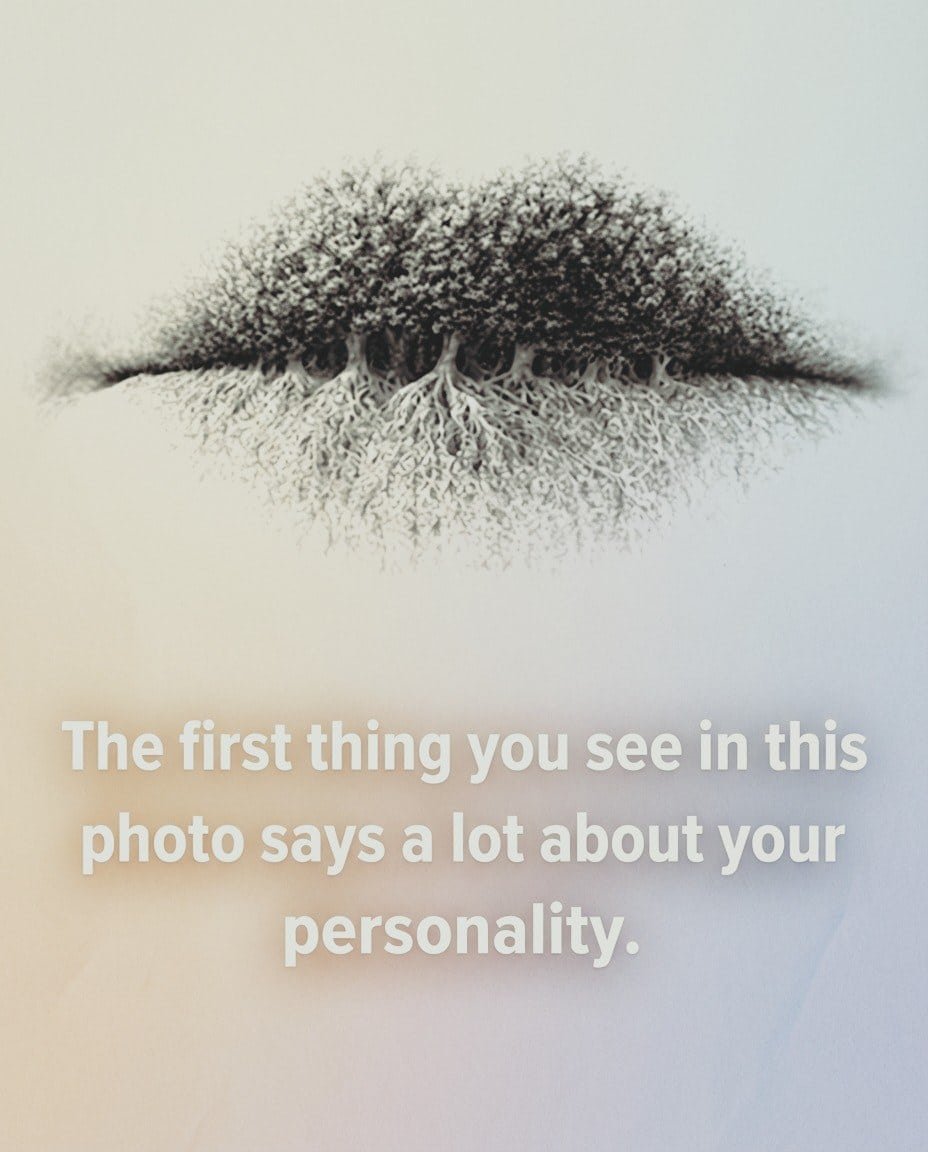
At first glance, the illustration looks like nothing more than a simple, unremarkable sketch.
But what you see in that critical, unthinking first microsecond is exposing psychological secrets that experts say were never meant to be made public.
Social media is currently erupting into total chaos over the controversial results.
Relationships are being tested and debates are raging as millions realize their closest friends and partners are fundamentally wired differently than they ever imagined.
The massive debate isn’t about who is right or who is wrong.
Instead, it has become a terrifyingly accurate metric of how rapidly your brain unconsciously filters the reality around you.
For decades, these types of optical illusions have been locked away in sterile academic labs.
They were quietly used by elite researchers to map the overlapping boundaries of cognition and raw human perception.
Now, this specific, highly controversial illustration has leaked into the mainstream, and the public is completely captivated.
It forces the human brain to make a split-second decision before conscious thought can even intervene.
Every single observer brings a radically different mental framework to the exact same image, explaining the fiercely divergent initial impressions.
When the image flashes on the screen, a massive portion of the population immediately locks onto a pair of prominent lips.
If this is your unconscious reflex, the hidden implications are absolutely staggering.
Neurologists suggest this exposes a desperate, deeply ingrained need for relational harmony and environmental stability.
You are the ultimate social stabilizer in your daily environment, driven by soft shapes and a desperate desire for calm.
Your preference for equilibrium and avoidance of conflict makes you incredibly dependable to those around you.
But this hidden trait comes with a devastating, often unspoken cost.
You are likely sacrificing your own personal boundaries and exhausting your own well-being just to keep the peace for everyone else.
But what happens if your eyes completely bypass the lips and immediately lock onto the towering, bold trees?
The internet is currently divided as highly expressive, socially dominant individuals realize this is their primary, unavoidable focal point.
If you saw the trees first, your psychological profile is radically outward-focused.
You are intensely energized by raw engagement and thrive on observing the visible hierarchies of power around you.
You are a master coordinator, capable of connecting ideas and people with ruthless, organizational efficiency.
Yet, top psychologists warn that this hyper-focus on the big picture comes with a dangerous blind spot.
It means you are often dangerously blind to the subtle emotional landmines and interpersonal signals right under your feet.
Then there is the third, incredibly rare group of viewers who are sparking the most intense online debates.
These are the people whose brains immediately dive into the shadows to find the hidden, intertwined roots within the design.
Historically, this level of intense, understated perception was a secret marker of profound analytical genius.
If you spotted the roots before anything else, your mind is operating on a terrifyingly deep level of introspection.
You demand to see the complex systems of cause and effect that secretly control the surface world.
You are the one who provides clarity and solves the unsolvable problems when the rest of the room is completely paralyzed.
However, this relentless drive for depth and meaning can easily trap you in a permanent state of overthinking.
The viral fallout from this psychological exposé is proving one undeniable, shocking fact about the human condition.
Our brains are constantly manipulating what we think we see, often without our permission.
You aren’t passively recording reality; your mind is aggressively editing it based on your deepest emotional scars, cultural conditioning, and hidden priorities.
This is exactly why two people can look at the exact same situation and walk away with violently different realities.
Entire online communities are arguing passionately over these ambiguous visual designs, proving that interpretation is never objective.
It isn’t a cognitive error or a simple mistake in judgment.
It is a fundamental neurological divergence that changes the entire landscape of human empathy and social understanding.
The areas of your brain responsible for threat detection, pattern recognition, and emotional association are fighting for control before you even take a breath.
This viral image is simply pulling back the curtain on that invisible, internal war.
Cultural influences and learned attention habits also play a massive, hidden role in what your brain decides to prioritize.
What we see first may reflect our most guarded personal priorities, exposing tendencies to dominate, nurture, or analyze that we thought were successfully hidden.
The workplace is becoming the ultimate battleground for these newly exposed psychological insights.
Coworkers are secretly analyzing each other’s immediate reactions, trying to figure out who is a natural stabilizer and who is obsessed with hierarchical dominance.
It is completely changing how teams are structured and how leadership potential is quietly evaluated behind closed doors.
No one expected a simple visual test to become the ultimate corporate lie detector.
But that is exactly what happens when undeniable cognitive science is released directly into the hands of the public.
Let’s look back at the history of how these perceptual biases were originally weaponized.
Early visual processing occurs incredibly rapidly, operating entirely in the shadows of the subconscious mind.
Long before you formulate a single conscious thought, your brain has already scanned the environment and categorized every single threat and opportunity.
Psychological researchers spent years trying to suppress the fact that our visual reality is nothing more than a highly subjective, predictive illusion.
They knew that if the public understood how easily perception could be manipulated, the fallout would be uncontrollable.
Now, the truth is officially out, and it is reshaping everything.
The implication for romantic relationships is perhaps the most explosive element of this entire viral phenomenon.
Couples are sitting across from each other, staring at the same screen, and realizing they exist in entirely different mental universes.
A partner who focuses on the roots is practically speaking a different emotional language than one who instantly locks onto the trees.
This isn’t just about what you see; it is about how you process love, conflict, and trust on a purely neurological level.
The realization that your partner’s brain actively filters out the details you find most important is causing a massive wave of online breakups and breakthroughs.
It highlights the terrifying flexibility and complex subjectivity of human interpretation in our daily lives.
The implications of this massive leak extend far beyond a single viral image or a playful online debate.
This exercise is a stark, unavoidable reminder that human perspective is dangerously malleable and entirely subjective.
By trusting these raw, instinctive reactions, we are finally unlocking a potent lens into our true, unfiltered selves.
Noticing what draws your attention first can inspire a shocking level of self-awareness about your instinctive ways of interacting with the world.
It proves that what appears completely ordinary may actually contain explosive layers of information about your personality.
Understanding these hidden tendencies is the ultimate secret to surviving complex personal and professional interactions.
The next time you look at something seemingly ordinary, remember that your brain has already decided what you need to see.
And the shocking truth behind those hidden cognitive filters might just change the way you live your life forever.