Six months before prom, a drunk driver ran a red light on a Tuesday afternoon and took everything I thought my life was going to be.
I remember the color of the sky. That particular late October blue that feels almost too clean, like a photograph of itself. I was thinking about what to make for dinner. And then I wasn’t thinking about anything for a long time.
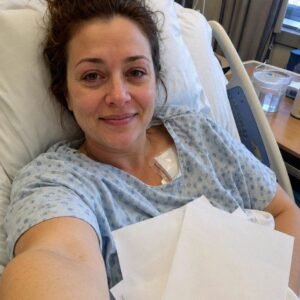
When I came back to myself, I was in a hospital bed with my mother’s hand wrapped around mine and a surgeon explaining things to me in the careful, measured cadence of a man who has learned to deliver catastrophic news without letting it land all at once. My legs. The extent of the damage. The word permanent used in a sentence, and then used again, and then a third time in a different arrangement of words that meant the same thing.
I was seventeen years old and I had been planning what color dress to wear to prom.
I almost didn’t go.
That’s the truth I’ve never fully explained to anyone, because the version of the story people prefer is the one where the brave girl goes to prom in her wheelchair and something beautiful happens. And something beautiful did happen. But the part before it — the part where I sat on my bed the afternoon of prom in my carefully chosen dress and told my mother I didn’t want to do it, that I couldn’t sit in a corner of a gymnasium for three hours and watch my former life move around the dance floor without me — that part is real too, and it belongs in the story.
My mother sat down beside me. She didn’t argue or push. She just said, quietly, You deserve one night. And something in the simplicity of it — not you’ll regret it if you don’t go, not think of how it will look — just the plain insistence that I was still a person who deserved things, got me off the bed.
So I went.
The gymnasium had been transformed in the way school gymnasiums are transformed for prom — lights, streamers, the specific smell of too much cologne and hairspray and teenage anticipation. My friends were kind in the distracted way of people who are also seventeen and in love with the night in front of them, and I understood that without bitterness. I arranged my dress carefully over my legs and found a spot near the edge of the room and settled in to watch.
People moved around me like water around a stone. Some of them made the effort to stop and say hello, and I could see the discomfort in their eyes, the slight relief when they moved on. Some of them simply didn’t look at me at all, which was its own particular kind of erasure — not cruel, exactly, just thoughtless, which sometimes amounts to the same thing. I sat with my hands in my lap and watched the dance floor and felt very far away from the person I had been six months before, the one who had stood in a dressing room holding two different dresses up to the light and debating between them.
I had been there maybe an hour when Marcus walked up.
I knew who he was the way everyone knew who he was — the quarterback, the kind of high school presence that generates its own gravitational field. He was the last person I expected to leave the center of the room and come to the corner where I was sitting, and when he appeared in front of me I didn’t know what to do with my face.
He didn’t perform concern. He didn’t have the look of someone executing an act of visible charity. He just said hey — the same way he would have said it to anyone — and asked if I wanted to dance.
I told him I couldn’t.
He smiled. Not with pity. With something more straightforward than that, something almost practical. Then we’ll figure it out, he said.
And we did. He took my hands and spun my chair slowly in the space at the edge of the floor and lifted my arms in something that was and wasn’t dancing but was entirely its own thing, and for ten minutes in the corner of that gymnasium I was not the girl people looked past. I was just a girl at prom, dancing.
When the song ended he squeezed my hands and said I looked great and then he was absorbed back into the crowd, back into his own night, the way people move back into their lives after a moment of genuine grace. I watched him go and felt something settle in my chest that I didn’t have the words for at seventeen — something about being seen, about the specific and irreplaceable feeling of being treated as a person who still deserved ordinary things.
I never saw him again after graduation.
Life after high school was a longer, quieter battle than prom had been.
Surgeries first — three of them over four years, each one a negotiation between what my body was and what the doctors believed it might become. Rehabilitation that was its own education in pain, in patience, in the specific discipline of working toward a goal that keeps retreating as you approach it. There were years when I was certain the wheelchair was permanent, and I made my peace with that, built a life inside it, learned to stop measuring my worth by the distance between where I was and where I had expected to be.
And then, gradually and then all at once, I stood again.
I went to college late. Finished slowly. Built a career in occupational therapy — which was not an accident, because none of my choices after that Tuesday in October were accidents. I knew what it meant to need someone who understood the architecture of a life rebuilt from the ground up, and I wanted to be that person for others. I became her.
Thirty years passed. Not without difficulty, not without grief, but fully — with the texture and weight of a life that had been chosen deliberately, piece by piece, out of the rubble of the one that had been taken.
I was in a café on a Wednesday morning when I slipped.
Nothing dramatic — just a wet floor, a split-second loss of footing, and a cup of coffee that went everywhere, including across both of my hands. The burn was sharp and immediate. The embarrassment was sharper. I stood there dripping and stinging while the people at the nearest tables looked over with the mild alarm of bystanders deciding whether to involve themselves.
Someone was already moving toward me before I could process the room.
A man in faded blue scrubs came around the counter with a mop and a stack of napkins, moving quickly despite a limp that caught my attention — the particular hitch of someone managing chronic pain through the momentum of staying useful. He cleaned the spill efficiently, pressed napkins into my hands, and then, without being asked, disappeared and came back two minutes later with a fresh coffee.
He set it down in front of me. I started to say he didn’t have to do that, and he waved it off.
I watched him count the coins from his pocket to cover it, one by one, with the careful attention of a person for whom the counting matters.
Something tightened in my chest that I didn’t immediately name.
He turned back to me and I looked at him — really looked, past the scrubs and the lines of his face and the weariness that years of hard work put in a person’s eyes — and I found him.
The jaw. The eyes. The particular quality of his attention, which had never been the attention of someone performing kindness but always the attention of someone for whom kindness was just the obvious response.
Marcus.
He didn’t recognize me. Why would he — I was no longer the girl in the wheelchair in the corner of a gymnasium, and he was exhausted and counting coins and moving through a Wednesday like a man who has been moving through hard days long enough that they’ve started to blur together.
I said thank you and gathered my things and left.
And then I sat in my car in the parking lot for a long time.
I came back the next morning.
He was wiping down tables when I walked in, and he looked up with the automatic courtesy of someone in a service job who has trained himself to meet every customer the same way, regardless of how the day is going.
I sat down at the table he’d just cleaned. I waited until he was close.
Then I said his name.
He looked up, uncertain.
I told him we had met once, thirty years ago, at a high school prom. That I had been in a wheelchair. That he had walked across a gymnasium to ask a girl nobody was looking at if she wanted to dance, and that when she told him she couldn’t, he had said then we’ll figure it out, and then he had figured it out.
His hands went still.
I told him what I had never told anyone, because I had never had the chance — that I had thought about that ten minutes more times than I could count. That there were years when the memory of being treated like a person who still deserved ordinary things was one of the things I held onto when holding on was the whole project. That I had become a therapist because of that night, in some way that I couldn’t fully trace but had always felt as true. That the number of people I had helped rebuild their lives after loss — I couldn’t give him a count, but it was not a small number — existed in some direct, unbroken line back to a boy who had crossed a room without being asked.
He stood there with his hands motionless above the table and his face doing something complicated and quiet.
I reached into my bag and put an envelope on the table between us.
Inside was a referral to a colleague of mine who specialized in exactly the kind of care he needed — I had seen enough people in pain to recognize it — and a letter I had spent the previous evening writing, addressed to the hiring manager of a healthcare facility I had worked with for years. A man with Marcus’s particular quality of attention, I had written, was exactly the kind of person they needed working with patients.
And below that, a personal check. Not charity — I was careful about how I framed it, because I understood pride and I understood what it costs a person to receive something they feel they haven’t earned. I told him to think of it as thirty years of interest on a debt I had been meaning to repay.
He looked at the check for a long time.
Then he looked at me.
I don’t remember doing anything, he said quietly. I just asked you to dance.
I know, I told him. That’s exactly the point.
We sat in that café for two hours. He told me about his years, and I told him about mine, and somewhere in the middle of it the weariness in his face shifted into something that looked like a man remembering that he had options, which is sometimes all any of us need to remember.
I drove home in the late afternoon light and felt, for the first time in a long time, that the specific shape of my particular life — the accident and the surgeries and the years of rebuilding and the career and all of it — had led me somewhere that made sense. Not in a tidy way. Not in the way of stories that wrap cleanly.
Just in the way of two people who had each given the other something irreplaceable at exactly the moment it was needed.
We had both, it turned out, been figuring it out.