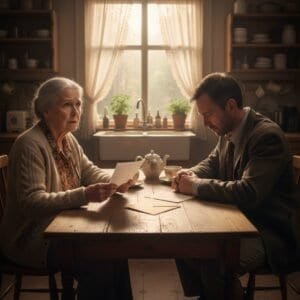
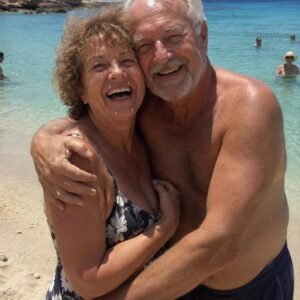
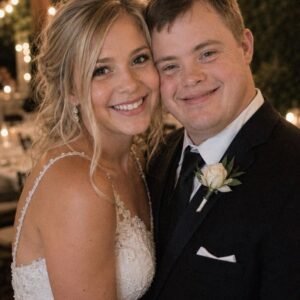
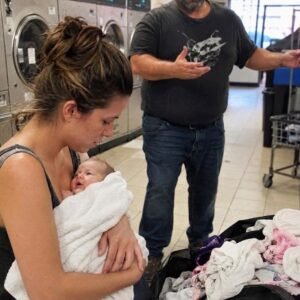
We got married on a Thursday.
Not a Saturday, not a Sunday. A Thursday, because the courthouse in Nashville charged half price on weekdays, and half price was the only price we could afford.
I wore a cream blouse my college roommate had lent me. Danny wore the one button-down shirt he owned, the one he usually wore to job interviews. We had $47 between us and a shared checking account that still smelled new.
My mother cried — not from joy, but because she thought we were making a mistake. His parents didn’t come at all.
There was no reception. No flowers. No cake. We went to a diner on Fifth Avenue afterward and split a slice of coconut cream pie, and Danny slid it across the table and said, ‘You take the bigger half. That’s the deal. For the rest of our lives.’
I thought that was the most romantic thing I’d ever heard.
I still do.
That was thirty years ago. Thirty years of a life I could never have predicted from the outside of it — from that small, fluorescent-lit courthouse room with a judge who kept checking his watch.
We lived in a one-bedroom apartment in East Nashville for the first three years. The radiator clanked all winter. The upstairs neighbor played guitar until two in the morning. Danny was doing HVAC work, coming home with grease under his fingernails and a quiet kind of exhaustion that he never once complained about. I was waitressing lunch shifts and taking one community college class at a time because that’s all we could pay for.
We had Marcus in year two. Premature, terrifying, six weeks in the NICU with machines I still see in my dreams sometimes. I remember sitting in that hospital hallway while Danny held my hand and said, ‘He’s going to be okay. He has to be. He’s already stubborn like you.’
He was right. Marcus came home and hollered so loud our neighbor knocked to make sure everything was all right.
Then came the years that blurred together the way good years sometimes do — not because nothing happened, but because what happened was life itself. A bigger apartment. Then a house, a small one on Caldwell, with a yard that needed work and windows that leaked in heavy rain. Danny built a raised garden bed in the backyard one summer and handed me a single tomato like he was presenting a trophy.
‘From our land,’ he said, completely serious.
I laughed for five minutes straight.
We had our second son, Eli, four years after Marcus. Easier delivery. Different kind of hard everything else. Eli cried constantly his first year and then became the most joyful child I had ever seen, as if he’d been storing it all up.
I finished my degree when Marcus was eight. I remember sitting in that graduation ceremony, cap slightly crooked, scanning the audience for Danny’s face. He was standing, not sitting — he’d stood up to see me better over the crowd, waving one arm like a man flagging down a rescue plane.
I finished my teaching credential two years after that. Taught fourth grade for seventeen years at a school eight miles from the house.
None of it was glamorous. All of it was ours.
The hard parts came too, because they always do. The year Danny’s company folded and he was out of work for nine months. The year I had a health scare that turned out to be nothing but felt like everything while we were waiting. The year Marcus and I barely spoke because of something stupid that started as an argument about money and grew into something uglier than either of us intended.
Danny held all of it together in the way quiet men sometimes do — not by talking it through, not by having the perfect words, but just by staying. Just by being there every single morning when I woke up.
Last Saturday, our sons threw us an anniversary dinner. A proper one, at a restaurant in Germantown that Marcus had booked three months in advance. There were flowers on the table — white roses — and our grandchildren were there, Eli’s two girls who are six and four and have his same laugh.
I wore an actual dress this time. Danny wore a suit. He’s gray at the temples now and there are lines around his eyes that weren’t there thirty years ago, and I looked at him across the table and thought, I would still split the coconut pie with you. Every single time.
The dinner was winding down. The girls were getting restless. Eli’s youngest had fallen asleep against my arm.
And then Marcus stood up.
He tapped his glass and cleared his throat, and the table went quiet. He’s thirty years old now, our NICU baby, our stubborn fighter. He had a folded piece of paper in his hand and he was gripping it a little too hard, the way you do when you’re trying not to fall apart.
‘Before we do the toast,’ he said, ‘I need everyone to hear something. I need Mom and Dad to hear something.’
He unfolded the paper slowly.
He said, ‘I’ve been working on this for six months. I didn’t know if I’d ever say it out loud. But tonight felt like the only night that made sense.’
Danny reached across the table and found my hand.
Marcus looked up from the paper, looked directly at the two of us, and his voice broke on the very first word.
And I understood, in that moment, that whatever he was about to say — whatever was written on that page he’d been carrying for six months — was going to change the way I understood our entire story.
The restaurant had gone completely silent.
Even the little ones seemed to feel it.
Marcus took one slow breath, looked back down at the paper, and began to read.