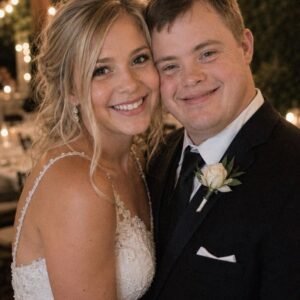
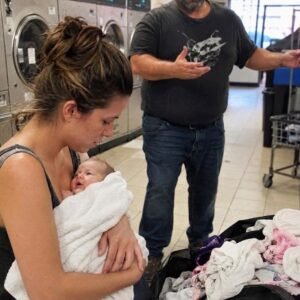
I almost bought a white dress.
Then Daniel mentioned he preferred ivory — more elegant, more classic, he said, scrolling through wedding photos online with an easy smile. So I bought ivory. At the time I thought it meant he was attentive. That I was lucky to be marrying a man who noticed the small things.
I understand now that Daniel noticed certain details for very specific reasons. And none of them had anything to do with love.
My name is Emily, and on the morning of my wedding, if you had asked whether I trusted my fiancé, I would have said yes before you finished the question.
Daniel had appeared in my life like something scripted. Flowers after our third date. Remembered offhand details from months earlier. He charmed my parents at dinner and somehow won over all four of my brothers — Adam, Luke, Nathan, and Ben — which was not something any man I had dated had managed before. My mother called him a gift. My father, who trusted almost nobody, respected him.
I remember one dinner early on when I mentioned that I was the only girl born on my father’s side in three generations. I told him about my brothers, named them all. There was a look in Daniel’s eyes when I said it.
I mistook it for warmth.
He proposed six months in. I said yes without hesitating.
A week before the wedding, his mother Margaret called to tell me their family was very pleased with the match. Not happy. Not excited. Pleased. The word stayed with me after we hung up, but I let it go. I was good at letting things go back then.
The wedding was in an old stone church. Nearly two hundred guests. My brothers had spent the morning pretending they weren’t emotional about it while teasing me relentlessly. My father squeezed my hand outside the doors before the ceremony and joked about whether I was sure. I laughed and said it was a little late now.
But something in me hesitated, even then. I didn’t know what to do with that, so I walked down the aisle.
The ceremony moved quickly. Before I had time to think, I was standing at the altar with Daniel’s hand around mine and the ring at the tip of my finger, and Father Dennis was smiling between us saying we were almost there.
Then the church doors opened.
The sound came first — the soft mechanical roll of wheels moving across stone. Every person in the room turned at once.
A young woman was moving slowly down the aisle in a wheelchair, a tiny baby wrapped in a pale yellow blanket held against her chest. She reached the altar and looked directly at me.
“Please,” she said. “Listen before you marry him and his family.”
I felt Daniel go rigid beside me.
Then Margaret shot to her feet. “How on earth did you find us? I thought I got rid of you!”
The woman didn’t flinch. She looked at Margaret for one calm moment, then turned back to me.
That was when I saw Daniel’s face go the color of paper.
“Tell her,” the woman said quietly, “what your mother said in the hospital.”
Daniel said her name under his breath like a warning. Samantha. He told her this wasn’t the place.
“No,” she replied, without raising her voice. “You made sure there was never a place.”
The baby shifted in her arms, and I looked at that tiny face and then back at my fiancé.
I asked about the hospital. Nobody answered. So I asked louder.
Margaret moved immediately — this woman was unstable, she said, had been fixated on their family for years, this was harassment. Father Dennis suggested both families continue privately. Nobody listened to him.
Samantha gave a short, flat laugh. “That’s interesting,” she said. “Considering your family disappeared the moment the doctors told you my baby was a girl.”
The church reacted like one body. I felt my stomach drop through the floor.
Daniel looked at me. He said he had been going to explain everything eventually. The word eventually landed somewhere in my chest and sat there.
Samantha had been engaged to Daniel before me. Three years together. They were supposed to marry after the baby was born. Her delivery had complications. She couldn’t walk afterward. And while she was still in the hospital recovering, Margaret had come into her room and asked the doctor one question — not how Samantha was doing, not whether the baby was healthy. She had asked if the child was a boy.
Margaret said that wasn’t true. Daniel said his mother had been upset, that everyone was overwhelmed, that Samantha was twisting things.
“I heard her,” Samantha said. “I was awake.”
The silence in that church was complete.
Three days after the birth, Daniel stopped answering Samantha’s calls and blocked her number.
My brother Adam was on his feet before she finished the sentence. Luke and Nathan followed. Ben looked like he was making calculations of his own. My mother grabbed Adam’s arm and told them all to let her finish. Luke demanded to know if she was hearing this. My mother said yes, and that I deserved the truth.
Daniel looked rattled, my brothers standing only feet away.
I told him to explain what it had been like, then.
He opened his mouth. Nothing came out. And somehow that was worse than a lie would have been.
Samantha reached into the bag beside her chair and produced a folded piece of paper. She hadn’t come to ruin my wedding, she said. She had come because I deserved to know why he had chosen me.
My hands shook as I unfolded it.
I didn’t understand what I was looking at, at first. Then I saw the highlighted names. Mine. My father’s. My brothers’. And beside one highlighted line, in handwriting I recognized immediately, two words.
Strong history of male children.
Everything that had happened over the past months rearranged itself in my mind in an instant. The questions about my brothers. How animated Daniel became when I described my family. How quickly he moved toward talk of children. How often Margaret made jokes about finally having a grandson. Margaret’s careful, particular word — pleased.
They were not pleased with me. They were pleased with what I might produce for them.
“He left us because our baby wasn’t a boy,” Samantha said quietly. “And then he met you.”
Daniel called it insane. He asked if I really believed he had proposed over some ridiculous family belief. And for the first time since I had known him, I noticed how rehearsed he sounded when things stopped going according to plan.
Samantha told us he had researched my family before our third date. He had forgotten his email was still logged into her tablet. That was how she had seen the wedding invitation, months later — and made her decision to come.
The church reacted again. Daniel’s face changed.
I folded the paper in half and looked at Margaret.
“You told me your family was pleased with this match,” I said.
Neither of them answered.
I understood now exactly what she had meant.
Daniel lowered his voice and stepped toward me. He said we should go somewhere private and talk.
But he still had not denied it. And I noticed.
I asked Samantha what the baby’s name was.
She blinked, like she hadn’t expected that question.
“Hope,” she said.
The baby made a small, sleepy sound against her shoulder.
Something settled inside me then, quiet and final. I lifted the front of my dress, stepped away from Daniel, and said I was not marrying him.
The church erupted. Margaret moved toward me immediately, and I told her calmly that I thought everyone had waited long enough.
Daniel followed me down the altar steps telling me I was making a scene over misunderstandings. I said a misunderstanding was forgetting flowers — not abandoning the mother of your child because she delivered the wrong gender.
The room went silent.
And then Daniel cracked.
“You don’t understand the pressure my family puts on things,” he muttered.
There it was. Not a denial. A confirmation, dressed up as an excuse.
My brothers started moving again. My father stepped between them and Daniel, told Adam no. Luke said Daniel had used me. My father said he knew — but to let me finish it my way.
That stopped them.
I looked at the man who had been about to become my husband.
“You know what’s sad?” I said. “I think this is the first honest conversation we’ve ever had.”
He knew I was right. I could see it.
I turned to Samantha and asked what had happened after he left. She looked briefly surprised at the question. Her sister had moved in to help, she said. The first weeks she hadn’t known how to care for herself and a newborn at the same time. But somehow they had figured it out. She looked down at Hope with the particular tiredness of someone who has survived something and doesn’t need to perform strength about it.
Hope stretched one tiny hand free from the blanket.
And for the first time since those doors had opened, something in the room felt like it was breathing normally again.
Daniel called out from behind me. He told me not to throw away our relationship over one difficult chapter from his past.
I turned and stared at him.
A difficult chapter.
Someone in the pews shouted that he had nerve. Margaret announced they were leaving. Nobody stopped them. Daniel looked at me one last time like he was searching for the words that would still work.
But the problem wasn’t his lies anymore.
It was the truth underneath them. Daniel had never loved anything unpredictable or uncontrollable, had never loved individuality or surprise or the ordinary mess of a real person. He loved outcomes. And I had been selected to be one.
He and Margaret walked out. Honestly, it was the most truthful thing they did all day.
I turned to the two hundred people who had come for a wedding.
“I’m sorry everyone made the trip,” I said.
My brother Adam answered immediately behind me: “Are you kidding? This is the most awake I’ve seen you in months.”
A few people laughed. Carefully, then more easily.
A month later, I met Samantha for coffee. We had exchanged numbers in the aftermath of everything, and we met again the following week, and eventually those meetings became ordinary.
Hope started recognizing me after a while. When I walked into the café she would kick her legs from the stroller with a kind of uncomplicated joy that made it hard to feel sorry for myself about anything.
One afternoon we sat outside in the sun while Hope slept beside us in her green blanket. Samantha said she had almost not come that day — to the church. I asked what had changed her mind.
She looked at Hope for a moment before she answered.
“I kept thinking about another woman standing where I had stood,” she said. “Believing promises I already knew weren’t real.”
I sat with that for a moment.
“Well,” I said, “I suppose Hope saved two women before she even learned to walk.”
Samantha smiled and didn’t say anything, and the baby slept on in her green blanket, one small hand open to the air.