I learned to skip lunch before I learned to ask for help.
That was just the arithmetic of being Noah’s mother. Every dollar I didn’t spend on myself was a dollar that went toward him — toward the good cereal he liked, the sneakers that fit properly, the school trip I never let him miss. I had been doing that math since the night his father packed a single suitcase and walked out of our apartment six months before Noah was born. He said he wasn’t ready. He said it quietly, almost apologetically, like he was declining an invitation rather than abandoning his child.
I didn’t chase him. I didn’t beg. I bought the crib myself, on layaway, and I picked it up three weeks before my due date on the bus because I couldn’t afford a cab.
Everyone had an opinion about what I should do next. My aunt said adoption. A woman at my church said the same. They weren’t cruel people — they just looked at me, twenty-six years old, no savings, no partner, cleaning offices at night and sitting with elderly patients during the day, and they did the math the way I was doing it and arrived at a different answer.
I kept him.
I don’t say that to make myself sound brave. It didn’t feel like bravery. It felt like the only thing I was capable of doing.
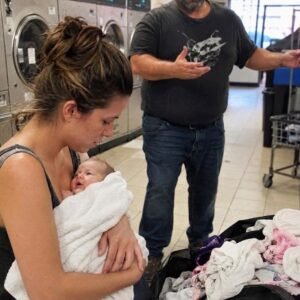
For eight years, we managed. It was never easy and it was never comfortable and there were nights I ate crackers for dinner and told myself I wasn’t hungry. But Noah was fed and Noah was warm and Noah thought our life was normal because I worked very hard to make sure he never had reason to think otherwise.
Then the hospital called with the estimate, and I sat in the parking lot afterward and stared at a number that was larger than everything I had earned in the past three years combined.
I was hired to care for Eleanor Whitfield after her stroke.
She was seventy-eight, the older sister of Arthur Whitfield, and she lived in the east wing of a house so large I got turned around in it for the first two weeks. Arthur owned the house. Arthur owned, as far as I could tell, quite a lot of things. His name was spoken in careful tones by the staff — not out of fear exactly, but out of the specific deference people extend to someone who has been powerful for so long that it has become simply the natural order of things.
He was eighty-one. A widower. His wife had died four years earlier, and from what Eleanor told me on her better days, he had loved her in the uncomplicated and total way that some people manage and most people only approximate.
He wasn’t bedridden when I arrived, but he moved through the house with the careful deliberateness of someone who has been told the clock is running. One evening I passed him in the hallway near the library, and he stopped and looked at me with the directness that old men who have stopped caring about social performance sometimes have.
“I’ll need a caregiver of my own before long,” he said. “My heart is failing.”
I said I was sorry to hear that.
He shrugged slightly, the way you shrug about weather. “It’s not a surprise. I’ve had a good run.”
I watched his children for months before I understood them.
There were three — two sons and a daughter, all in their fifties, all prosperous in their own right and still somehow hungry for more. They visited with the frequency of people who are monitoring a situation rather than attending to a person. They spoke to Arthur with the particular blend of affection and impatience that telegraphs inheritance anxiety, and they spoke to the staff not at all.
Arthur watched them the way you watch a weather system you have long since stopped being able to control.
One night, late, I was finishing my notes at the small desk outside Eleanor’s room when Arthur appeared in the hallway. He did that sometimes — wandered at odd hours, unable to sleep.
“Your hands are shaking,” he said.
I looked down. The hospital had called that afternoon.
I don’t know why I told him the truth. Maybe because it was late and I was tired and he was looking at me like a person rather than an employee. Maybe because I had been carrying the number from that estimate for weeks and it had become very heavy.
I told him about Noah. About the surgery. About the estimate and the gap between it and everything I had and could reasonably save in any realistic amount of time.
He listened without interrupting, which was more than most people managed.
Then he went back to his room.
The next morning, he asked me to come to his office before my shift started.
He was already seated when I arrived, the room still dim, morning light just beginning at the edges of the curtains. He had a cup of tea he wasn’t drinking.
“Marry me,” he said. Not dramatically. The way he might have said sit down or close the door.
I stood there looking at him.
“Your son gets the surgery,” he said. “Fully funded, immediately. I get a wife.” He paused. “My children have been planning around me for three years. A wife complicates their plans considerably. That’s useful to me.”
“Mr. Whitfield —”
“Arthur.”
“Arthur.” I stopped. Started again. “I’m thirty-four years old.”
“I’m aware.”
“You’re —”
“Dying. Yes.” He said it without self-pity. “I have perhaps a year. Possibly less. I’m not asking you to love me. I’m asking you to be present, to be treated well, and to allow me the satisfaction of making my own decisions about my own estate while I still can.”
I thought he had lost his mind. I went home that afternoon and sat at the kitchen table while Noah did homework across from me, his small face bent over a worksheet, and I thought about the number from the hospital and the number in my bank account and the distance between them.
Three days later, Noah’s doctor called with new results. The window for the surgery was narrowing.
I called Arthur the next morning.
The wedding was not small.
I had imagined something quiet — a courthouse, two witnesses, paperwork. Arthur had other ideas. He said that a quiet wedding would signal to his children exactly what it was, and that was not the point. The point was the appearance of a life chosen, not a transaction completed.
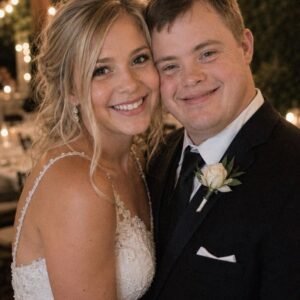
So there were white roses and a string quartet and reporters at the gate and two hundred guests I had never met, all of whom watched me walk down the aisle with the careful attention of people trying to determine what exactly they were looking at.
Noah walked beside me. He was in a navy suit I’d had altered twice to fit him right. He thought it was the most important day of our lives.
He wasn’t entirely wrong.
Arthur’s children stood in the front row with the composed expressions of people who have decided to be gracious in public and devastating in private. His eldest son, Richard, shook my hand at the reception with a grip that communicated everything he didn’t say out loud.
Arthur stood through the ceremony straighter than I had seen him stand in months. He looked, for one afternoon, like a man who had remembered he was still in charge of his own story.
That night, after the guests had gone and the house had settled into quiet, Arthur asked me to come to his office.
He closed the door.
I stood in the center of that room — bookshelves floor to ceiling, a desk older than I was, the particular stillness of a space where serious things had always been decided — and I waited.
He sat down and folded his hands on the desk and looked at me with an expression I hadn’t seen on him before. Not the bluntness of the hallway, not the practicality of the proposal. Something more considered. More careful.
“The doctors have their money,” he said. “Noah’s surgery is scheduled for Thursday. That’s done and it won’t be undone regardless of anything else.”
I had needed to hear that confirmed. I felt something release slightly in my chest.
“Now,” he said, “you should understand what you’ve actually signed for.”
He opened the desk drawer and removed a document, several pages, and set it in front of me.
“I’ve had my attorney restructure my estate,” he said. “Three months ago, before I approached you. What you’re looking at is not a prenuptial agreement. It’s a trust. Noah is the primary beneficiary. You are the trustee.”
I looked at the document. At Noah’s full name, printed in formal legal type.
“Arthur —”
“I had four people in my life who needed nothing from me,” he said quietly. “My wife was one. I spent sixty years with her and never once doubted it. The other three are in this house right now, sleeping in the guest rooms they grew up in, waiting to see what I leave them.” He paused. “I watched you skip lunch for six weeks. I watched you take Eleanor’s calls at midnight because you didn’t want to seem unavailable. I watched you with your son on the one afternoon he visited and you thought no one was paying attention.”
I didn’t say anything.
“I’m not a sentimental man,” he said. “But I’m a precise one. And I know the difference between someone performing care and someone actually providing it.”
He pushed the document slightly toward me.
“I have perhaps eight months,” he said. “I’d like them to be peaceful. I’d like to know that when I’m gone, someone who deserved better got it.” He looked at me steadily. “That’s what you signed for. I thought you should know.”
Noah’s surgery was on a Thursday in March, six days after the wedding.
I sat in the waiting room for four hours in the clothes I’d worn to the hospital, Arthur’s last name on the insurance forms, Noah’s name on the surgery board. A nurse brought me coffee I didn’t ask for. I drank it.
When the surgeon came through the doors, he was already smiling.
Arthur lived for eleven months.
They were, as he had requested, mostly peaceful. We developed a routine — morning tea in the library, evenings when he read and I sat nearby and we talked or didn’t talk with the ease of people who have run out of things to perform for each other. He told me about his wife. I told him about Noah’s father, the whole story, which I had never told anyone completely.
He listened the way he always listened. Without filling the silence before it was ready to be filled.
His children contested the trust. Richard hired three attorneys. It took fourteen months and cost them considerably more than they gained.
The trust held.
Noah is twelve now. He runs at recess and complains about math homework and has recently become passionate about a video game I don’t understand but pretend to find interesting.
On the bookshelf in our living room, there is a photograph from the wedding. Noah in his navy suit, grinning at the camera. Arthur beside me, standing straight, looking not at the camera but at something slightly to the left of it — some middle distance, some private satisfaction.
I think about what he said that night in the office.
I know the difference between someone performing care and someone actually providing it.
I had spent eight years providing it without anyone noticing. It turned out someone was paying attention after all.
It turned out that mattered more than I knew how to say.