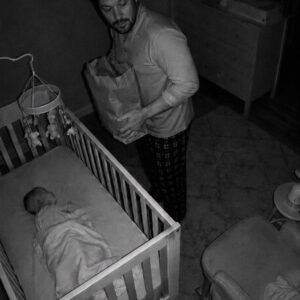
I thought I was coming home early to surprise my husband with an anniversary gift.
Instead, I stood frozen near our front door and heard him say one sentence that made me question every memory we had ever shared.
“She walked right into my trap.”
The worst part wasn’t only what Matthew said.
It was realizing that the love story I had trusted my entire life might have had another version—one I had never been allowed to see.
I married my best friend.
That wasn’t just a sweet phrase we used when people asked how we met.
Matthew and I had been friends long before either of us understood romance.
Our mothers became close when we were toddlers, and our families lived in houses beside each other.
Some of my earliest memories included him.
Preschool classrooms.
Birthday parties.
Science fairs.
Summer afternoons in our backyards.
Matthew was the boy who handed me his crayons when mine broke.
I was the girl who always saved him a seat at lunch.
When a classmate mocked my oversized glasses in fourth grade, Matthew shoved him into the dirt.
He earned detention for it.
“I don’t care,” he told me afterward. “Nobody gets to make you cry, Ashley.”
That was Matthew.
Protective.
Patient.
Reliable.
Everyone loved him.
I loved him most.
I was never as confident as he was.
When a teacher asked for volunteers, I lowered my eyes and stared at my desk.
When someone complimented me, I assumed they were only being polite.
My father adored me, but he had a habit of rescuing me before I could struggle through anything myself.
Whenever I hesitated, he made the decision for me.
Whenever I doubted myself, he stepped in with an answer.
Everyone called it love.
Eventually, I began to see it as proof.
Proof that other people trusted their judgment more than they trusted mine.
I became very good at almost doing things.
I almost ran for student council.
I almost auditioned for a school play.
I almost applied to the college I secretly wanted to attend.
I almost became the person I imagined I could be.
Matthew was the only one who noticed the pattern.
“You always stop yourself right before something good happens,” he told me one afternoon during our sophomore year.
I laughed.
“You don’t know what you’re talking about.”
He gave me a small smile.
“One day, you’ll realize I do.”
By high school, everyone expected us to become a couple.
They were right.
One Friday evening after football practice, Matthew walked me home beneath the streetlights.
He was unusually quiet.
Then he stopped near my driveway.
“I’ve been pretending we’re only friends,” he admitted.
My heart started pounding.
“So have I.”
He kissed me before I could lose my courage.
College only made our relationship stronger.
We studied together, argued over takeout orders, survived exams, and planned a future that always seemed to include the other person.
The day we graduated, Matthew brought me to the little diner where we had spent countless afternoons studying.
Outside, beside the same window where we used to sit, he lowered himself onto one knee.
“I don’t want to imagine another chapter of my life without you,” he said. “Will you—”
“Yes.”
He laughed before I had even allowed him to finish.
“At least let me ask the entire question next time.”
Five years after our wedding, we lived in a comfortable house only three streets away from the neighborhood where we had grown up.
Every morning began with coffee together.
Every evening ended on the same couch.
Our life felt familiar, steady, and safe.
Three weeks before our fifth wedding anniversary, I decided Matthew deserved something special.
Months earlier, we had wandered through a jewelry store downtown.
He paused in front of a watch and admired it for several seconds.
He didn’t buy it.
I memorized the model.
After saving quietly for weeks, I finally ordered it.
The store called on a Monday morning to tell me it was ready.
I told Matthew I had an important meeting after lunch.
Instead, I took a vacation day and drove across town to collect his gift.
The small black bag rested on the passenger seat during the drive home.
I couldn’t stop smiling.
I imagined his expression when he opened the box.
Perhaps he would tease me for spending too much.
Perhaps he would kiss me before he even said thank you.
I pulled into our driveway shortly after two in the afternoon.
Matthew’s car was already there.
That was strange.
He normally worked until five.
I assumed he had come home for something and decided the surprise would be even better.
I unlocked the front door quietly.
Then I heard my name.
My hand froze around the doorknob.
Matthew was standing in the living room, speaking to someone on the phone.
“Don’t worry,” he said with a soft laugh. “She walked right into my trap back in high school.”
Every muscle in my body tightened.
He continued.
“I’ve been working on this since we were teenagers.”
The gift bag brushed against my leg.
My fingers closed around the paper handles until they dug into my skin.
What trap?
Why did it involve me?
Who was he talking to?
There was a pause while the other person responded.
Then Matthew lowered his voice.
“I kept everything.”
A chill moved through me.
Everything?
I took a small step closer.
The hardwood floor creaked beneath my shoe.
I stopped breathing.
Matthew didn’t appear to hear it.
He continued pacing through the living room.
“I honestly wasn’t sure she would ever believe she could do it.”
My stomach twisted.
Believe she could do what?
He chuckled again.
“No, she still doesn’t know.”
Blood rushed loudly in my ears.
I wanted to walk into the room and demand an explanation.
Instead, fear kept me hidden.
Then Matthew said something that seemed to destroy every safe memory I had.
“If she had figured it out earlier, the whole thing would have fallen apart.”
My heart raced.
What had he hidden from me?
I leaned forward, desperate to hear the rest.
“My plan is about to work.”
His footsteps stopped.
I couldn’t stay another second.
Panic swallowed every rational thought.
I backed toward the door, stepped outside, and hurried to my car before he could see me.
By the time I sat behind the wheel, tears had blurred the windshield.
My hands shook so badly that I couldn’t place the key into the ignition.
A lifetime of memories rushed through my mind.
Birthdays.
School dances.
Our first kiss.
Our wedding.
Every promise he had ever made.
What if none of it had been real?
I drove without knowing where I was going.
Nearly an hour later, I parked beside a quiet lake.
Wind shook the bare branches above the water.
My phone rang.
Matthew.
I let it ring until it stopped.
A message appeared.
“Where are you? I thought I heard your car earlier. Are you okay?”
Another arrived less than a minute later.
“Ashley? You’re scaring me.”
I stared at the screen until it went dark.
Then a memory surfaced.
During my freshman year of college, I had completed an application for a prestigious summer fellowship.
For three days, I debated whether to submit it.
Eventually, fear won.
I crumpled the papers and shoved them into my backpack.
A week later, an acceptance email appeared in my inbox.
I remembered crying with happiness.
I told everyone I couldn’t believe I had actually submitted the application.
But had I?
Or had someone else done it?
The thought struck me so hard that I gasped.
One memory became another.
Then another.
Tiny moments I had always considered luck.
Unexpected opportunities.
Doors opening at the exact moment I had decided to walk away.
Once I saw the pattern, I couldn’t stop seeing it.
For the next three days, I felt like a stranger inside my own marriage.
I smiled during dinner.
I answered Matthew’s questions.
I kissed him goodnight.
Every false moment tasted bitter.
While he slept or went to work, I searched.
I checked drawers.
Storage containers.
Old boxes.
I found nothing.
Part of me began wondering whether fear had distorted what I heard.
Then, on the fourth afternoon, I found the first piece of proof.
Matthew left his laptop open while stepping outside to take a phone call.
I knew opening his private files was wrong.
But trust had already cracked between us.
My hands trembled as I searched through archived emails.
One folder was labeled simply “Drafts.”
Inside were hundreds of messages.
Most were unfinished.
One subject line made my body go cold.
“Ashley’s Fellowship Application.”
I opened the attachment.
It was the application I had abandoned during college.
Completed.
Submitted.
The timestamp showed that it had been sent three days after I decided not to apply.
The confirmation had been directed to my inbox.
Matthew must have logged into my email from his laptop, submitted the form, and allowed me to discover the acceptance without knowing what he had done.
At the time, I assumed I had sent it during some last-minute burst of courage and forgotten because I had been overwhelmed.
Now I knew the truth.
I hadn’t pressed the button.
Matthew had.
“There has to be another explanation,” I whispered.
But the timestamps left no room for one.
I searched older messages.
Another year.
Another application.
Then another.
Graduate school.
A writing conference.
A leadership program.
A manuscript submission.
The manuscript eventually became my first published novel.
For years, I believed that achievement began when I finally found the courage to send my work into the world.
But it wasn’t my finger that had pressed “Submit.”
Every application contained my work.
Every success still depended on my talent and effort.
But each time fear persuaded me to quit, Matthew had quietly refused to let me.
My husband.
My oldest friend.
The person I trusted more than anyone.
When Matthew returned inside, I had already closed the laptop.
He smiled at me with the same familiar expression I had loved since I was 15.
“Everything okay?”
I looked at him.
For the first time, I wondered how much of my life truly belonged to me.
That night, after dinner, I couldn’t continue pretending.
“Who were you talking to?”
Matthew looked up from the plate he was rinsing.
“What?”
“The phone call. You talked about a trap.”
His expression went blank.
“I came home early.”
The plate slipped slightly in his hands before he caught it.
“You heard me?”
“I heard enough.”
The kitchen became silent.
I asked the question that had poisoned every thought for days.
“What trap, Matthew?”
He placed the plate carefully into the drying rack.
Then he faced me.
“I hoped you would never hear it like that.”
“Then tell me what it meant.”
He rubbed his hands across his face.
He didn’t deny anything.
He didn’t accuse me of misunderstanding.
Instead, he said quietly, “Come with me.”
He led me into the garage.
Behind several boxes of holiday decorations sat an old cedar chest.
I had seen it many times but never opened it.
Matthew knelt beside the box.
For several seconds, he rested one hand on the lid.
When he finally lifted it, I forgot how to breathe.
There were no photographs inside.
No ordinary keepsakes.
The chest was filled with journals.
Dozens of notebooks, each carefully dated.
They covered every year of our lives from our sophomore year of high school until the present.
“What is this?”
“My mistake,” Matthew said.
He handed me the oldest journal.
I opened it.
The first entry was dated September 14.
“Ashley raised her hand in biology today.
Only once.
She almost apologized afterward.”
I turned the page.
“October 2.
She ordered lunch without asking me what she thought she should choose.”
Another page.
“November 18.
Ashley disagreed with our history teacher.
She looked terrified.
I’m proud of her.”
I turned the pages faster.
Matthew had not documented my grades, awards, or public achievements.
He had recorded confidence.
Every small moment when I stood straighter.
Every time I trusted my voice.
Every choice I made without asking someone else for approval.
The journals were not really about accomplishments.
They were about me.
The girl I had never believed was enough.
Tears landed on the paper.
“I noticed something when we were 15,” Matthew said.
I couldn’t answer.
“You never lacked talent, Ashley. You left before you had the chance to discover what you could do.”
I remembered him watching from the hallway as I abandoned debate tryouts.
Watching me tear up art competition forms.
Watching me throw away applications.
“I kept thinking that if fear made every decision for you, someone needed to stop it.”
I looked up.
“So you decided to become that person.”
“I thought I was helping.”
“You lied to me.”
“Yes.”
“You manipulated me.”
“Yes.”
“You decided what happened to my life.”
Matthew opened his mouth.
No defense came out.
I closed the journal.
“You never trusted me.”
His forehead creased.
“I trusted you more than anyone.”
“No. You trusted your plan.”
For the first time since I had known him, Matthew looked completely lost.
“I didn’t want your success for myself,” he whispered. “I wanted you to see yourself the way I saw you.”
“You never gave me permission to fail.”
The silence felt endless.
Matthew returned to the cedar chest.
From the very bottom, he removed one final notebook.
Unlike the others, its pages were almost completely blank.
Only the first page contained writing.
He handed it to me.
My hands shook as I read the sentence.
“When Ashley finally believes she doesn’t need me anymore, my job is finished.”
My heartbeat slowed.
“The plan,” I whispered.
Matthew nodded.
“The full sentence you didn’t hear was, ‘My plan is about to work. Ashley finally believes she doesn’t need me anymore. My job is finished.’”
I looked at him.
“I wasn’t celebrating trapping you,” he said. “I was talking to my father. I told him I thought the plan I began when we were teenagers was finally complete.”
“You were speaking to your dad?”
“He asks about you every week.”
I lowered myself into a chair.
Every terrible possibility I had imagined disappeared.
But what remained was somehow more painful.
Matthew hadn’t spent years trying to destroy me.
He had interfered because he loved me.
That did not make the truth harmless.
In some ways, it hurt more.
“I need to ask you something.”
He nodded.
“If I had failed, embarrassed myself, or made a terrible decision, would you have stepped in every time?”
He didn’t answer.
His silence was enough.
I stood.
“That is the problem.”
His shoulders dropped.
“I know.”
“No. I don’t think you do.”
I walked toward the door.
“You believed in me.”
“More than anyone,” he whispered.
“Thank you.”
Hope briefly appeared in his face.
Then I continued.
“But you never believed I had the right to own my own life.”
The hope disappeared.
“I need space.”
“Ashley—”
I raised one hand.
“For once, I need to decide what happens next.”
He nodded.
For the first time in our lives, Matthew allowed me to leave without trying to influence where I went.
The months that followed were difficult.
Awkward.
Painful.
Necessary.
We started seeing a therapist.
Matthew began catching himself before stepping in.
He would start researching a solution before I asked for one.
Then he stopped.
Instead of saying, “I already handled it,” he learned to ask, “What do you think?”
At first, I didn’t know how to answer.
I had spent so long relying on people who loved me that I didn’t always recognize my own voice.
Then one afternoon, I made an important business decision that Matthew quietly disagreed with.
I saw the concern flash across his face.
But he didn’t interfere.
“What do you need from me?” he asked.
I studied him carefully.
“Nothing.”
He nodded.
“Okay.”
That single word changed something between us.
For the first time, I discovered how satisfying it felt to succeed or fail because the decision had truly belonged to me.
Not every choice I made was perfect.
Some cost money.
Some embarrassed me.
A few made me question my judgment.
Matthew kept his promise.
He stood beside me without grabbing the wheel.
Slowly, I began to understand something I had never learned as a child.
Failure did not prove that I was incapable.
It proved that I was living a life I had chosen.
Almost a year later, I stood backstage at the launch of my own publishing company.
The old Ashley would have found an excuse to disappear.
She would have convinced herself that someone more qualified should stand beneath those lights.
This time, I walked onto the stage.
My hands shook.
My voice trembled during the first sentence.
Then I looked toward the audience and kept speaking.
Afterward, I spotted Matthew sitting in the back row.
An older man beside him leaned closer.
“You must be proud.”
Matthew smiled.
“I’ve always been proud of her.”
Then he looked at me.
“I just finally learned that loving someone doesn’t mean deciding who she should become.”
For most of our lives, one of us had always been leading.
First my father.
Then Matthew.
Now, neither of us walked ahead.
We walked beside each other.
I never forgot the sentence I overheard that afternoon.
“She walked right into my trap.”
But over time, I understood the deeper truth.
Matthew’s trap had never been designed to imprison me.
It had been built to push me toward a version of myself he believed was waiting beneath my fear.
His intentions had been loving.
His methods had still been wrong.
Love could not excuse taking away someone’s choices.
Belief could not replace consent.
And protection could become another kind of cage when it never allowed the person inside to make mistakes.
Matthew had spent years helping me become stronger.
In the end, the greatest proof of my strength was making him step back.
Our marriage survived, not because I forgave everything immediately, and not because his intentions erased the harm.
It survived because he finally stopped trying to write my story.
He handed the pen back to me.
And for the first time in my life, I wasn’t afraid to use it.