There are moments in life you picture for so long that when they finally arrive, they feel like a dream you’re watching from the outside. My wedding day was supposed to be one of those moments.
I had rehearsed it a thousand times in my head. The white dress. The smell of flowers. My father’s arm steady beneath my hand as he walked me down the aisle.
Just my father. That was always the picture. Because it had always been just the two of us.
My mother left when I was three years old. She didn’t say goodbye, didn’t write a letter, didn’t look back. One day she was there and the next she wasn’t. My father never spoke badly of her. He never spoke of her at all, really. What I knew about love, I learned from watching him — the way he stayed when staying was hard, the way he showed up even when he was exhausted, the way he made sure I never went without even when I didn’t know what we were going without.
He braided my hair before school. He worked double shifts. He sat on the edge of my bed when I had nightmares and didn’t leave until I was asleep again. And all the while he said, Your life will be better than mine. I’ll do everything to make sure of it.
I believed him. I had no reason not to.
When I met Julian three years ago in Barcelona, I was thirty-one and certain I’d already used up whatever luck I’d been given. He was careful and calm and funny in a quiet way that snuck up on you. He asked questions and actually listened to the answers. He remembered things — small things, throwaway things — and brought them up weeks later. I fell in love with him slowly and then completely.
Dad had only met him over video call. Julian and I had been living in Europe, and the connection was always choppy, the screen always freezing mid-sentence. They’d waved at each other, exchanged pleasantries, smiled. But they hadn’t been in the same room. I told myself that was fine. The wedding would fix that. The wedding was going to be the beginning of everything.
Dad got sick the week we flew home. A bad fever, nothing serious, but it meant he missed the rehearsal dinner. I’ll see him properly tomorrow, he told me over the phone. When I walk you to him. That’s the right way.
I held onto those words the whole next morning.
I remember the inside of that church like a photograph. The soft creak of old wood floors. The white roses everywhere — on the pews, along the windows, massed at the altar. The sound of the string quartet starting up, tentative and sweet. My hands were shaking and I pressed them against my father’s arm to steady them, and he pressed back.
Steady, he said quietly. You’re ready.
We moved through the doors together.
Julian was already at the altar. He was wearing a dark suit and he looked nervous in the best way, the way people look when something matters to them. He saw me first and he smiled — that slow, private smile I’d come to think of as mine.
Then his eyes moved slightly to my left.
To my father.
I felt it before I understood it. My father’s arm went rigid. His fingers pressed into mine — not gently. He slowed, then stopped completely. We were still twenty feet from the altar and the music was still playing and the whole church was watching, and my father had gone completely still.
I looked at him. His face had drained of colour. Not pale the way people get when they’re nervous. Pale the way people get when they see something they cannot explain.
Dad? I whispered. What’s wrong?
He didn’t answer me. He was looking at Julian.
I felt the floor shift beneath me.
The music faltered. Someone in the pews coughed softly. My father took one step back and I grabbed his arm before his legs could give out. He was trembling. My father — a man who had worked night shifts alone for twenty years without complaint, a man who had never once cried in front of me — was trembling like something had reached through the air and gripped him by the chest.
No, he breathed. The word came out barely. No. This isn’t possible.
And then he found his voice.
He lifted one hand — shaking, extended toward Julian like he was trying to make certain of what he was seeing — and his voice cracked through that church like something breaking.
HOW CAN IT BE YOU? he said. I WAS SURE YOU HAD DISAPPEARED. THIRTY YEARS — WHERE HAVE YOU BEEN?
The church went absolutely silent.
My mother’s name. That’s what he said next. A name I had never heard, spoken in a voice I had never heard from him. Something between grief and rage and disbelief — all of it collapsed together into seven syllables I could not make sense of.
I looked at Julian.
He was not surprised. That was the thing that broke me open — he was not surprised at all. He was watching my father with an expression I could not read, something between sorrow and resolve, and he did not look at me for a long moment. When he finally did, something had shifted in his face.
He looked like a man who had been carrying something heavy for a very long time and had just decided to set it down.
It’s too late to go back, he said quietly. We’re here now. And you deserve to know the truth — the real reason I came looking for you.
The string quartet had stopped. The flowers still smelled sweet. The candles still burned.
And in the silence of that church, between the man who had raised me and the man I had promised to marry, a thirty-year secret began to surface.
I did not cry from happiness that day. I cried for other reasons — for my father’s shaking hands, for a name I hadn’t known existed, for the version of my life I’d believed in completely until that moment. But I also stayed. I stood between both of them, and I stayed, because whatever was coming next, I had earned the right to hear it.
My father raised me to stand still when things got hard.
Whatever Julian was about to tell me, I was going to listen.

Related Posts
Widow Discovers a Hidden $218,000 Account Her Late Husband Left Her After a Misdelivered Bank Statement Exposes Her Son’s Six-Year Secret
I never expected a bank statement to break my heart. I was seventy-three years old that spring. My husband Frank had been gone six years. My son Michael called every…
Read more
At 67, I Took My First Vacation to Malta and Decided to Say ‘Yes’ to Everything – I Never Expected to Find Love Again
At 67, I took my first solo vacation and made myself one promise. I would say yes to everything. Yes to unfamiliar food. Yes to boat rides. Yes to dancing…
Read more
I Learned That My Huge Hospital Bill Had Been Paid by a Stranger – Then a Man Walked in and Said, ‘I Saved You. Now You Have to Do Something for Me’
A Stranger Paid My Entire Hospital Bill—Then He Walked In and Said, “Now You Have to Do Something for Me” I spent three days in a hospital wondering how I…
Read more
I Married My Best Friend – Just Before Our Fifth Wedding Anniversary, I Overheard Him Say, ‘She Walked Right Into My Trap’
I thought I was coming home early to surprise my husband with an anniversary gift. Instead, I stood frozen near our front door and heard him say one sentence that…
Read more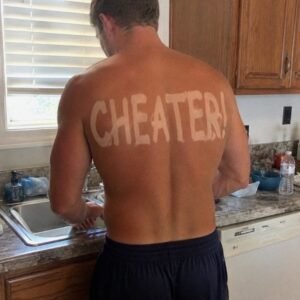
My Husband Came Home from a ‘Business Trip’ with ‘CHEATER!’ Sunburned Across His Back – I Used It to My Advantage
My Husband Returned from a “Business Trip” with CHEATER Burned Across His Back—So I Let His Lies Destroy Him My husband came home from what he claimed had been a…
Read more
A Man Screamed at a Mother Changing Her Newborn in a Laundromat – An Elderly Stranger Gave Him a Lesson No One Will Ever Forget
At first, I thought the cruel man shouting across the laundromat was the worst danger in the room. Then the front door opened. The young mother beside me went pale,…
Read more