For three years, my husband left our house at exactly 6:30 every evening.
His keys would jingle near the door, and another emergency involving Uncle John would appear.
A broken pipe.
A dead battery.
A fall in the driveway.
A leaking water heater.
Somehow, only Bob could help.
For three years, I believed him.
The wind chimes on our porch used to make our home feel peaceful. Neighbors often told me they hoped their marriages would look like ours after seven years.
Bob brought me coffee with two sugars and a splash of cream. He remembered the anniversary of my father’s death. He fixed things before I asked.
Those small acts became the evidence I used whenever doubt tried to enter.
Still, I had never met Uncle John.
He never attended Thanksgiving, sent a Christmas card, or called Bob on his birthday.
“I could bring him dinner,” I suggested more than once.
“He is sick and proud,” Bob would answer. “Please let me handle it.”
So I did.
I called that trust.
Looking back, it was fear wearing a loyal wife’s face.
Bob’s mother, Nancy, was another mystery. He claimed they had not spoken in years.
Whenever I asked why, his expression hardened.
“She made her choice.”
The only proof she existed was an old photograph hidden in the bottom drawer of his desk. Nancy had kind eyes and a stubborn jaw. I sometimes studied the picture while Bob was away, wondering what could make a mother and son disappear from each other’s lives.
During the final months, other things began to change.
Bob kept his phone facedown.
The moment he returned from Uncle John’s house, he showered before speaking to me.
One evening, I asked why.
“His place is filthy.”
“Every night?”
The look he gave me ended the conversation.
I stood at the sink after he left and watched his taillights vanish.
“What are you washing off?” I whispered.
Our anniversary was the next night.
I prepared a roast, opened wine, lit candles, and wore the navy dress Bob once loved.
At 6:28, I stared at the clock.
At 6:30, his keys came off the hook.
Bob entered the dining room wearing his coat.
“Uncle John’s cat is stuck in a tree.”
For a moment, I thought he was joking.
“Tonight? On our anniversary?”
“He is panicking. You know how he gets.”
“No, Bob. I don’t know how he gets. I have never met him.”
He continued buttoning his coat.
“Tell him to call the fire department.”
“I did not know you were this heartless.”
Then my husband left me beside two cooling plates and an empty chair.
The door closed softly.
That quiet click broke something inside me.
I went upstairs and opened the drawer containing Bob’s old address book. Near the back, written in his handwriting, was Uncle John’s landline.
I dialed.
An older woman answered after four rings.
“Hello?”
“My name is Penelope. I’m Bob’s wife. I’m sorry to call, but I need to speak to Uncle John.”
The line became silent.
“You said you are Bob’s wife?”
“Yes. John’s nephew Bob.”
“My name is Sylvia,” she said slowly. “I was John’s wife.”
The word struck me.
“Was?”
Her voice softened before she spoke five words that froze the blood in my veins.
“John died ten years ago.”
I sat on the edge of the bed.
“There must be another John.”
“Is he Nancy’s brother?”
“Yes.”
“Then that was my husband. Bob has not come here in years. Not even for the funeral.”
I could barely breathe.
“For three years, Bob has said he visits John every night.”
“I do not know where he has been going,” Sylvia said. “But it was not here.”
After the call ended, I stared at the address book in my lap.
A thousand evenings.
A thousand excuses.
Every lie had been placed in a dead man’s mouth.
When Bob returned around ten, I sat on the couch holding a book I had not read.
A faint floral scent clung to his shirt.
I smiled carefully.
“How is Uncle John’s dog?”
Bob paused for only a second.
“He is doing great. John is feeling better too.”
It had been a cat when he left.
Now it was a dog, and a man dead for ten years was recovering beautifully.
I looked down before Bob could see what had changed in my face.
The following evening, his phone buzzed at 6:25.
“John’s water heater is leaking.”
“Drive safely,” I said.
I waited twenty seconds after he left, took my keys, and followed him.
Bob did not drive toward the highway or the older neighborhoods where I had imagined his uncle lived.
He crossed town, passed an elementary school, and turned onto a quiet street lined with maple trees.
He stopped outside a modest house with a child’s bicycle in the yard.
I parked half a block away.
Bob walked to the front door without knocking and let himself inside.
A woman in her late thirties greeted him with a tired, relieved smile.
Beside her stood a boy of about twelve.
Bob bent down and kissed the boy’s forehead with the effortless familiarity of a father who had done it many times.
My fingers tightened around the steering wheel.
An affair would have been terrible.
What I saw looked like an entire family.
Then an older woman appeared through the kitchen window, carrying plates toward the table.
Gray hair. Kind eyes. Stubborn jaw.
Nancy.
The mother Bob claimed had not spoken to him in more than a decade was inside that house preparing dinner.
I had spent seven years believing I knew the people missing from my husband’s life.
In reality, I was the person missing from theirs.
I drove home without confronting him.
Then I called Sylvia again.
This time, she told me the history Bob had buried.
Before he met me, Bob had been involved with a woman named Milly. She became pregnant, and Bob walked away.
Nancy was so disgusted by her son’s abandonment that she cut him off and helped Milly raise the child.
Three years earlier, Bob appeared at Milly’s door asking to know his son.
“Milly believes he lives far away,” Sylvia said. “She does not know he has a wife.”
The truth was not that Bob had secretly chosen his son.
He had chosen secrecy.
He could have told me he had a child. He could have admitted his shame, asked for forgiveness, and tried to become a better father honestly.
Instead, he built two lives and made both women believe they possessed the whole man.
When Bob returned that night, a suitcase waited beside the front door.
He stopped beneath the porch wind chimes.
“What is this?”
“I called Uncle John’s wife.”
His face collapsed.
For once, no emergency appeared to save him.
“Penelope, let me explain.”
“You used a dead man to hide your son, your mother, and another woman.”
“I was afraid you would leave.”
“You were not afraid of losing me. You were afraid of facing consequences.”
He reached toward me.
I stepped back.
“Milly deserves the truth. Your son deserves a father who does not treat him like a secret. And I deserve a marriage that exists after 6:30.”
“I love you.”
“You loved the comfort I gave you while someone else carried the truth.”
I opened the door.
“You have had three years to explain. Now you can leave.”
I filed for divorce the following week.
With Sylvia’s help, I contacted Milly. We met for coffee once.
She arrived believing I was the woman Bob had started seeing after separating from her.
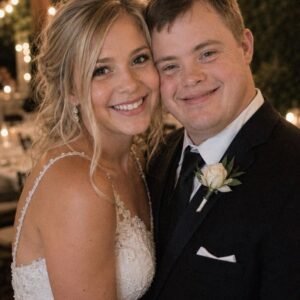
When I showed her our wedding photograph and told her we had been married for seven years, she covered her mouth.
“He told me he was rebuilding his life for us,” she whispered.
“He told me he was repairing his uncle’s house.”
Neither of us laughed.
We were not friends, and we did not pretend betrayal automatically made us sisters.
But we left that table with something Bob had denied both of us.
The truth.
Months later, I moved into a smaller apartment. There were no porch wind chimes and no neighbors praising my marriage.
There was one bedroom, a narrow kitchen, and windows that let in the morning sun.
I enrolled in the pottery class I had postponed for years. My first bowl leaned badly to one side, but it belonged completely to me.
I also called my sister. We had stopped speaking because she never trusted Bob, and I chose defending my marriage over listening to her concern.
She cried when she heard my voice.
“I should have tried harder to reach you,” she said.
“I should have been willing to hear you.”
We began again without pretending the lost years had not happened.
Sometimes I still remember the sound of Bob’s keys at 6:30 and feel my body brace for a door closing.
Then I look around my apartment.
Nothing here is impressive enough to make neighbors jealous.
Nothing is staged.
Nothing disappears every evening.
The marriage everyone admired had been a beautiful room built around a locked door.
I live in a smaller place now.
But every key fits.
Every story is mine.
And I would choose one honest room over a mansion full of lies every time.