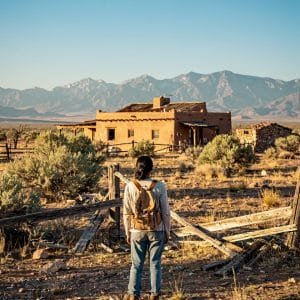
My name is Carrie Lawson and I was twenty-one years old, three years out of the Virginia foster care system, and in possession of thirty-three dollars when I bought seventy-one acres of condemned dairy farm outside Staunton in the Shenandoah Valley.
I want to tell you something about aging out of foster care that the people who design the systems understand in the abstract and that I understand in the specific: it is not a transition. A transition implies moving from one stable place to another stable place, a period of managed passage between two points of support. Aging out is a door that opens and then closes behind you, and what is on the other side of it is not a new stable place but the requirement to build one from nothing while also learning, simultaneously, how to build things.
I had been in foster care since I was seven years old. Eleven placements in eleven years across four Virginia counties. I had learned the skills the system teaches without meaning to — how to fit into spaces that were not designed for me, how to want nothing I couldn’t carry, how to locate the exits in any room in the first five minutes. These skills are useful inside the system. They are less useful outside it, where the requirement is to build rather than to adapt.
I was eighteen when the door closed.
I spent three years as nobody’s problem.
The temp agency in Waynesboro called me when they had work and did not call me when they didn’t, which was an honest arrangement that I appreciated even when the frequency of calls was low. I had worked warehouse loading and restaurant dishes and a six-month stretch at a plant nursery in Augusta County that had been my favorite work because plants were patient and did not require conversation and responded to care in visible ways.
The nursery job ended when the season ended.
I had thirty-three dollars on a Tuesday in March.
I was at the Waynesboro Public Library — warm, quiet, WiFi, the essential amenities — when I found the listing on the Augusta County surplus property site.
Parcel 14D. Seventy-one acres of agricultural land in the Shenandoah Valley, four miles outside Staunton. Farmhouse structure, 1930s construction, condition derelict. Dairy barn, condemned 2018. Silo — structural integrity unassessed. Well on property. Creek on eastern boundary. No utilities. Dairy operation — ceased approximately six years prior under circumstances noted in county records. Delinquent taxes: thirteen thousand four hundred dollars, assumed by purchaser. Opening bid: thirty-three dollars.
The listing had been posted two weeks earlier.
No bids.
I called the county office from the library phone — the library had a phone for patron use, which I had relied on before — and confirmed that the auction closed the following day at noon.
I was at the Augusta County courthouse at nine the following morning.
The auction room was small. The auctioneer was a tired man who had processed many parcels and found none of them interesting. The other people in the room were there for a commercial kitchen equipment lot and a seized vehicle that generated the afternoon’s only real bidding.
Parcel 14D came up at ten forty-five.
The auctioneer described it. Seventy-one acres. Condemned barn. Derelict farmhouse. Thirteen thousand in taxes. Six years abandoned. Opening bid thirty-three dollars.
I raised my hand.
The auctioneer looked at me over his glasses.
“Any advance on thirty-three?”
Nobody moved.
“Sold.”
I walked to the property from the bus stop two miles away, which took thirty-five minutes and which I did not mind because the March morning was clear and the Valley was doing what the Shenandoah Valley does in March — showing you exactly what it’s going to be in June and making you believe it.
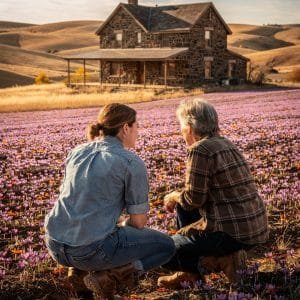
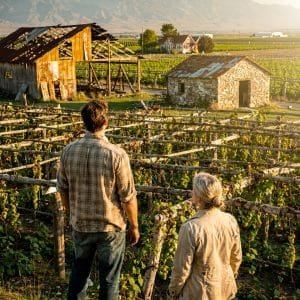
The farm came into view as I topped a small rise — seventy-one acres of bottomland and hillside, the farmhouse at the near edge of the property, the dairy barn larger than I had expected from the photographs, the silo rising behind it with the specific vertical authority of agricultural structures that were built to last and had.
The condemned notice on the barn was official and recent. The barn itself was large and old and visibly stressed in the way of structures that have been asked to do a job for a long time without maintenance — the roof had failed in sections, the walls were bowing outward in two places, the doors had warped off their tracks.
The farmhouse was better than the barn. Not good — the porch had failed, the windows were boarded, the chimney had lost several courses of brick at the top — but better. The foundation looked sound. The roof, from the outside, appeared intact.
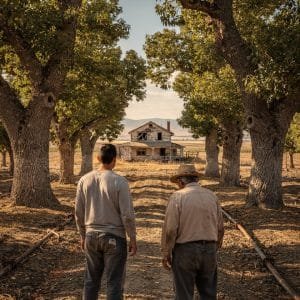
I was standing at the fence trying to determine my next practical step when the pickup truck slowed.
The man driving was perhaps seventy, with white hair and the specific physical economy of someone who has spent decades doing work that requires efficiency — no unnecessary motion, every action deliberate. He had work-worn hands and the look of someone for whom this particular stretch of road was as familiar as his own driveway.
He rolled down his window.
“You the one who bought the Hendricks place?” he called.
The Hendricks place. A name. The listing had identified the property only by parcel number.
“Yes sir,” I said.
He looked at me — a direct, assessing look that was not unkind but was not pretending either. Taking inventory.
He pulled over.
His name was Earl Compton. He had farmed the adjacent property for forty years — dairy originally, then beef cattle, now primarily hay — and he had watched the Hendricks farm sit empty for six years with the specific discomfort of a man who values productive land and finds its waste offensive.
“What do you know about dairy farming?” he said.
“Nothing,” I said.
He nodded as if this was an acceptable answer, possibly because it was honest.
“You willing to learn?”
“Yes sir.”
Another assessment.
“I’ll be back tomorrow morning,” he said. “Seven o’clock. We’ll look at the barn.”
He drove away.
I slept in the farmhouse that night in the sleeping bag I had carried in my backpack from Waynesboro. The east room was sound — original plaster walls, original wood floors, the smell of a house that has been closed for six years but was built to last by people who built things to last. The creek on the eastern boundary was audible from the bedroom window.
Earl came at seven the following morning, as promised, with a thermos of coffee and a toolbox and the no-nonsense presence of a man who has decided to do something and is doing it.
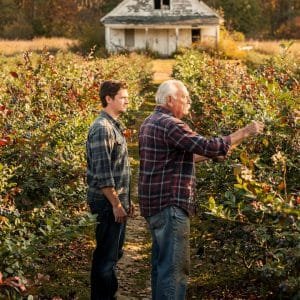
What followed across the next four months was the most comprehensive education I had received since — since ever, truthfully, because my education had been interrupted and inconsistent and the things that mattered most had not been taught in any classroom I had sat in. Earl taught with the patience of someone who has taught before and knows that the most important lessons are the ones that require repetition.
I learned the barn — what had failed and why, what could be repaired and what needed replacement, the sequence of repairs that would make the building safe before making it functional. I learned the farmhouse — plaster repair, window glazing, the chimney that needed repointing and got it. I learned the land — the bottomland fields that had grown up in broom sedge and needed brush-hogging before they could be productive, the hillside that was better suited to hay than to row crops, the creek that ran clean and cold and was a resource rather than a liability if managed correctly.
Earl worked beside me four days a week. On the fifth day he went to his own farm. On weekends his son Marcus came and the three of us worked together in the way of people who have discovered that they work well together and are using the discovery while they have it.
I was four months in, working with Earl on the silo foundation — the concrete footer had cracked and needed repair before winter — when the tractor blade caught on something.
The something was metal.
Three feet down, in soil that had not been disturbed since before the farm was abandoned, the tractor blade had hooked on the edge of what turned out to be a metal storage container — the kind used for firearms or documents, approximately the size of a large tackle box, sealed with a combination lock.
Earl got off the tractor.
He looked at the container for a long moment.
Then he looked at me.
“I always thought something was wrong about how they left,” he said. His voice was careful.
I looked at the container. “What do you mean?”
He told me then — told me what he had known for six years and had had no one to tell. The Hendricks family — a couple in their fifties and their adult son — had left the farm abruptly in the spring six years earlier. No sale, no notice to neighbors, no forwarding address. The farm had simply been abandoned and the taxes had accumulated and the county had eventually listed it.
Earl had always known the Hendricks — had been their neighbor for thirty years. He said the departure was not consistent with the people he had known. He said he had told the county sheriff’s department, once, two years after they left. He said the deputy he spoke to had noted it and that nothing further had happened.
The combination lock on the container required a locksmith who drove out from Staunton the following morning.
Inside the container were documents.
Financial records. A handwritten letter. And a USB drive in a plastic bag.
The letter was from Thomas Hendricks — the adult son, based on the signature. It was addressed to whoever found it.
It described what had happened.
It described why they had left.
It described who had made them leave.
I called the Augusta County Sheriff’s Department the following afternoon.
The investigation that was opened the following week is ongoing and I cannot speak to its specifics here, both because it is active and because the Hendricks family, who are alive and who have been located in another state, deserve to have the specifics disclosed through appropriate channels rather than through a story on the internet.
What I can tell you is that Earl sat across from me at my kitchen table — the table I had salvaged from the derelict farmhouse and refinished over a weekend — after the investigators left, and he looked at the window that faced his farm across the fence line, and he said: “I always knew something was wrong.”
“You told someone,” I said. “Two years in.”
“It wasn’t enough.”
“It was what you had,” I said. “Now there’s more.”
He looked at me.
“You’ve been on this farm four months,” he said. “You found in four months what six years didn’t.”
“I was digging in the right place,” I said.
He almost smiled.
“Maybe,” he said. “Or maybe the right person was finally here to dig.”
The dairy barn is structurally repaired.
The farmhouse is livable and becoming comfortable.
Earl’s son Marcus moved into the farmhouse east wing in November.
I have been here for fourteen months.
The Shenandoah Valley in January is cold and clear and enormous in the way of places that don’t apologize for what they are.
I am twenty-two years old and I own seventy-one acres of it.
The social worker said to have realistic expectations.
I am still deciding what realistic means.